4 Kinds of Water Damage That Threaten a Quebec Home’s Foundation
Four kinds of water damage threaten the foundation of a Quebec home: seepage through cracks and joints, hydrostatic pressure pushing against the walls, frost expanding inside the concrete and the soil, and soil movement, as the ground softens, swells or erodes under the house. In Quebec, frost and snow amplify each of these, which makes managing water around the house a decisive factor.
In practical terms, a Montreal home receives more than 1,000 mm of precipitation and more than 2 metres of snow every year, according to the 1991-2020 climate normals from Environment and Climate Change Canada (Montréal-Trudeau station). That water has to go somewhere. If the grading, the gutters and the foundation drain don’t carry it away, it builds up along the walls, looks for the smallest opening and, once winter arrives, freezes in place. The damage is rarely dramatic at first: a damp spot, a hairline crack, a musty smell. It gets worse with every cycle. Here is how each of these four types of damage happens, which signs give it away, and what to do about it, in order.
How Does Water Get Into a Foundation?
Water gets through anything that isn’t perfectly sealed: cracks, the joint between the slab and the walls, pipe openings and, over time, the concrete itself, which is porous. The more saturated the soil around the foundation, the harder water is pushed toward the inside.
This is especially common during the spring thaw and the heavy rains of fall, when the ground can’t absorb any more. Water showing up in the basement is often the last stage of a problem that has been progressing for a long time. Left alone, it leads to:
- cracks that widen and concrete that flakes;
- mold and lingering odours;
- damage to insulation, drywall and flooring;
- corrosion of mechanical and electrical equipment in the basement.
To understand where the water comes from, read our article on how underground water tables in Montreal affect your home’s foundation, and to recognize what water has already done, see our guide to the different types of foundation cracks.
What Is Hydrostatic Pressure, and Why Does It Push on Basement Walls?
Hydrostatic pressure is the push that groundwater exerts on a wall, and it grows with the height of the water. It increases by 9.8 kPa for every metre of depth: at the bottom of a 2.4 m (8 ft) basement wall surrounded by saturated soil, it reaches about 23.5 kPa.
Here is what that means in practice. In the worst theoretical case, with soil saturated to the top of the wall and no drainage, the total force is about 28 kN per metre of wall (0.5 × 9.81 × 2.4²), or nearly 2.9 tonnes-force per linear metre. On a 10-metre wall, that is roughly 29 tonnes. This is a theoretical ceiling, not a job-site measurement: in reality, the soil and a drain in good condition reduce that load, which is exactly what a French drain is for.
When that pressure wins, it leaves recognizable marks: horizontal cracks at mid-height, a wall bowing inward, white efflorescence on the concrete. Our article on hydrostatic pressure and basement water leaks covers these signs in detail.
Why Does Frost Make Water Damage Worse in Quebec?
Frozen water takes up about 9% more volume than liquid water, according to the USGS Water Science School. In a crack, a joint or saturated soil, that expansion pushes on the concrete and lifts the ground. When it thaws, the freed-up space lets water travel deeper on the next cycle.
The APCHQ (Quebec’s residential builders’ association) makes the same point in its technical drainage guide (in French): a large amount of water around the foundation perimeter promotes infiltration and increases how deep frost penetrates the soil. In other words, water that collects in the fall makes winter frost deeper and more destructive. The same pattern repeats in spring with the thaw: see our article on the impact of snowmelt and spring flooding on your basement foundation.
Does Clay Soil Change How Water Affects a Foundation?
Yes. Clay soil swells when it absorbs water and shrinks when it dries. Because that movement is never even under the whole house, it creates differential settling or heaving, with diagonal cracks and doors that stick.
In several parts of Greater Montreal, the soil contains clay, and vegetation makes things worse: the roots of a large tree dry out the soil on one side of the house while a misdirected downspout soaks the other. Moving water can also carry off the fine particles in the soil and leave voids under the footing. Our article on how soil type affects foundation stability explains how to recognize your situation.
What Signs Show That Water Is Already Damaging Your Foundation?
The most reliable signs are efflorescence (white powder on concrete), dampness or a musty smell that returns after rain, horizontal or diagonal cracks, and doors or windows that stick. A horizontal crack or a bowing wall calls for a prompt inspection.
| What you see | What the water is probably doing | Urgency |
|---|---|---|
| White powder on concrete (efflorescence) | It is passing through the wall and leaving salts as it evaporates | Keep an eye on it |
| Musty smell or damp patches that keep coming back | Infiltration or chronic moisture | Get it inspected |
| Horizontal crack or bowing wall | Hydrostatic pressure or frost push | Urgent |
| Diagonal crack, sticking doors and windows | Differential soil movement | Get it inspected quickly |
| Standing water near the walls after rain | Poor surface drainage | Fix it soon |
If you tick one or more of these boxes, see what to expect during a foundation repair inspection before you book a visit.
How Do You Protect Your Foundation From Water, in Order?
Start with what costs the least: move surface water away (grading and downspouts), then check underground drainage (French drain, sump pump), then repair the cracks. Each step reduces the load on the next one.
- Grading. The APCHQ guide, which relies on the Quebec Construction Code (CCQ 2015), sets a minimum slope of 2% away from the foundation wall and considers about 10% over the first 6 feet (1.8 m) preferable, because backfill settles over time.
- Downspouts.CAA-Québec (in French) recommends that downspouts discharge water at least 2 metres from the foundation. See also the hidden dangers of poor gutter systems.
- Vegetation and watering. Keep trees, shrubs and automatic sprinklers away from the walls, to avoid both roots that dry out the soil and excess water.
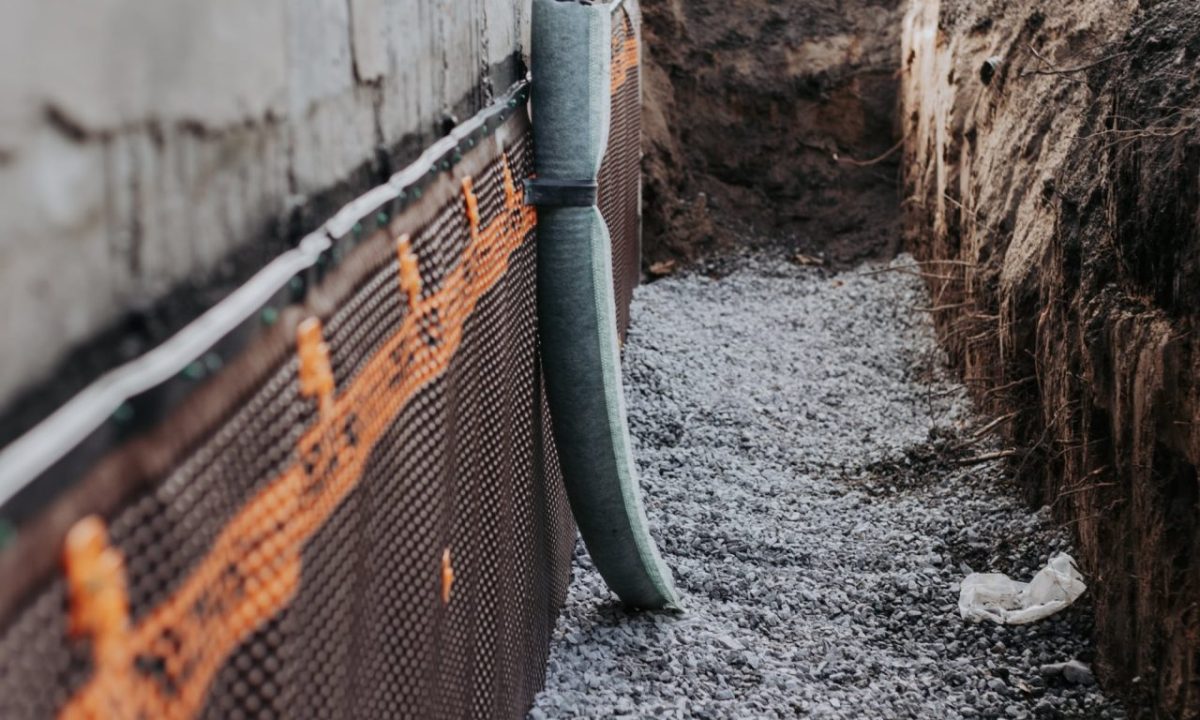
- French drain and membrane. According to CAA-Québec, the waterproofing membrane and the drain last about 40 years, and the drain can shift, crush or clog. To choose between an exterior and an interior solution, read our comparison of French drains vs. interior drainage systems, or visit our French drains and waterproofing page.
- Sump pump. CAA-Québec states that the sump pit and pump should be inspected and cleaned every year.
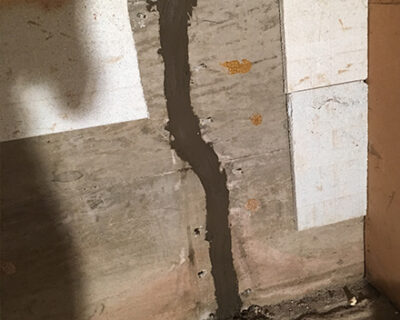
- Cracks. A crack that lets water through is sealed from the inside by polyurethane or epoxy injection. See our comparison of polyurethane vs. epoxy injection.
How Much Does Water Damage to a Foundation Cost, and Does Insurance Cover It?
According to CAA-Québec, sealing simple cracks from the inside costs anywhere from a few hundred to a few thousand dollars; exposing the foundation, installing a membrane or repairing a drain can reach tens of thousands. Some water damage is covered by insurance and some is not: notify your insurer quickly.
The gap between the cost of an early repair and a late one is the best reason to act early. Our article on foundation repairs and home insurance in Quebec explains what is generally covered and what is not.
Who Can Assess the Condition of Your Foundation?
Marco Réparation de Fondation visits in person for every estimate and every job site inspection, from the assessment through to the completion of the work. The company holds a valid license from the Régie du bâtiment du Québec (RBQ No. 5775-3246-01) and serves Montreal, Laval, the South Shore (including Longueuil and Brossard), the West Island and Salaberry-de-Valleyfield.
Noticed signs of water infiltration or foundation movement?Contact Marco Réparation de Fondation for a free inspection and a diagnosis of the real cause, before the next freeze cycle makes it worse.
Frequently Asked Questions
Does a musty basement smell always mean the foundation is damaged?
No. Condensation, a plumbing leak or poor ventilation can also be the cause. The signal to take seriously is dampness or a smell that comes back after heavy rain or snowmelt, because it points to the outside of the house.
Can a crack that lets water through be repaired without excavating?
Often, yes. Polyurethane injection (active cracks or cracks exposed to water) or epoxy injection (structural cracks) is done from the inside. However, if the cause is failing drainage, the crack is likely to come back until the water is managed outside.
When is the best time of year to check your foundation?
In spring, after the thaw, and in fall, before the freeze: those are the two times when water and frost act on the foundation the most. Our seasonal checklist walks you through it season by season.