When Is a Foundation Crack Serious in Quebec?
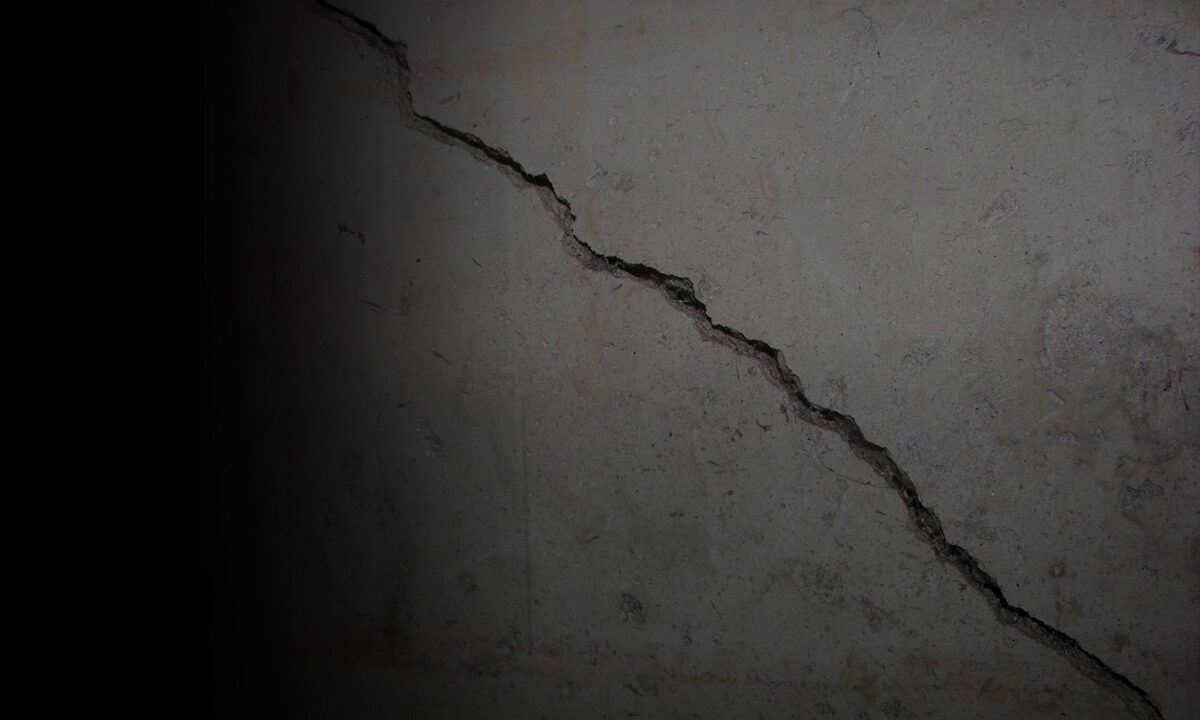
A foundation crack becomes a concern when it is wider than 3 mm (1/8 in.), when it runs horizontally or in a stair-step pattern, when it keeps growing from one winter to the next, or when it lets water in. A thin, vertical, stable crack is most often just the concrete shrinking as it cured, and it poses no danger to the structure.
The 3 mm benchmark comes from the APCHQ Performance Guide (APCHQ is Quebec’s residential builders’ association; edition consulted: 2006, in French). It treats cracks caused by normal shrinkage as acceptable unless the width exceeds 1/8 in. (3 mm), and it says no basement wall crack should let water in or cause frost heave. Four criteria therefore matter, in this order: width, direction, change over time, and the presence of water. Here is how to apply them to the crack in front of you, whether it is in the foundation or, as Quebecers say, in the solage.
Are All Foundation Cracks Serious?
No. Concrete shrinks as it hardens and dries, which leaves fine vertical cracks in most foundations. According to the APCHQ, these shrinkage cracks are acceptable as long as they stay under 3 mm and don’t let water through.
The building engineers at Onesta Bâtiment Conseil in Laval (in French) describe shrinkage cracks as thin, vertical and closed. They show up in predictable places: the APCHQ notes that the code requires control joints at intervals of no more than 15 m in walls longer than 25 m, precisely to decide in advance where the shrinkage crack will form. The crack that should worry you is the other kind: one that is open, shows an offset between its two sides, or keeps growing. Our guide to the different types of foundation cracks helps you recognize them visually.
What Does Each Type of Foundation Crack Mean?
A crack’s direction tells you a lot about its cause. A thin vertical crack almost always comes from concrete shrinkage. A horizontal crack points to soil pushing against the wall, often made worse by water. A stair-step or diagonal crack often signals uneven settling of the foundation.
| Type of crack | Most common cause | Alert level |
|---|---|---|
| Vertical, thin (under 3 mm), closed | Concrete shrinkage while drying | Low: monitor it, seal it if it lets water in |
| Vertical or diagonal, over 3 mm, open, with an offset | Soil settling under the foundation | High: get an engineer’s assessment |
| Horizontal, sometimes with a bowing wall | Lateral soil pressure, amplified by water and frost | Urgent: structural engineer |
| Stair-step, along block or brick mortar joints | Differential foundation movement | High: have it assessed |
| Any width, with water coming in | A crack open all the way through | Medium: seal it and fix the drainage |
The horizontal crack deserves special attention. According to Onesta Bâtiment Conseil, it is caused by the lateral thrust of the soil, which increases considerably in frost-susceptible soil such as clay, especially without proper drainage behind the walls. Concrete block walls resist it less well than poured concrete walls. To understand where that thrust comes from, read our article on hydrostatic pressure.
How Can You Tell If a Crack Is Moving?
Measure it, then check it again. Record its width to the millimetre with a ruler or a crack gauge, draw a pencil mark at each end, and take a dated photo. The APCHQ recommends checking how cracks wider than 1/8 in. evolve after a winter, meaning after a full freeze-thaw cycle.
A crack is moving if it widens, lengthens, shows an offset, or if new cracks appear nearby. Sticking doors and windows, uneven floors and drywall cracks are other clues that the movement goes beyond the foundation: see our article beyond the basement. If the crack has passed your pencil marks, or its width has increased from one winter to the next, it is active.
What Should You Do Based on How Serious the Crack Is?
A thin, stable crack is monitored or sealed. A crack that lets water in gets repaired, whatever its width. A horizontal or stair-step crack, one wider than 3 mm, or one that keeps changing calls for an assessment by a structural engineer first, because the right repair depends on the cause, not the symptom.
- Seal it. The APCHQ lists epoxy injection, flexible-product injection and a suitable membrane as repair methods. Our polyurethane vs. epoxy comparison explains which to choose depending on whether the crack is active or structural.
- Fix the cause. A sealed crack comes back if water keeps pushing. Grading, gutters and the foundation drain come first: see our 4 kinds of water damage that threaten a foundation.
- Stabilize the structure. When the wall or the soil is moving, the answer is reinforcement or underpinning: see foundation repair or replacement.
On budget, CAA-Québec says that sealing simple cracks from the inside costs between a few hundred and a few thousand dollars, while more complex work, such as exposing the foundation, installing a membrane or repairing a drain, can reach tens of thousands. That gap is why waiting is expensive: see the real cost of ignoring foundation problems.
Is a New Home Protected Against Foundation Cracks?
For a limited time, yes. The warranty plan administered by Garantie Construction Résidentielle (GCR) covers non-apparent workmanship defects for 1 year, hidden defects for 3 years, and major defects, such as a collapse caused by soil settlement, for 5 years.
GCR notes on its coverage page (in French) that an apparently similar problem can be classified differently depending on the file. If your home is new, document the crack as soon as it appears (dated photos, measurements) and contact GCR to confirm your coverage. This is a general guide, not legal advice.
Who Should You Call About a Foundation Crack?
For a simple crack, or one that lets water in, a foundation specialist can diagnose and seal it. For a horizontal or stair-step crack, or one that is widening, have the structure assessed by an engineer first: the APCHQ states that when structural problems are found, an assessment by a specialist (an engineer) is necessary.
Marco Réparation de Fondation visits in person for every estimate and every job site inspection, from the assessment through to the completion of the work. The company holds a valid license from the Régie du bâtiment du Québec (RBQ No. 5775-3246-01) and serves Montreal, Laval, the South Shore (including Longueuil and Brossard), the West Island and Salaberry-de-Valleyfield. See what to expect during an inspection or visit our crack repair page.
Worried about a crack?Contact Marco Réparation de Fondation for a free inspection and an honest opinion on the real cause, before the next freeze cycle.
Frequently Asked Questions
Can a crack that has stopped moving still cause damage?
Yes, if it goes all the way through the wall. The APCHQ requires that no basement wall crack let water in. A stable but open crack is still an entry point for moisture, and the water that freezes in it widens it over the winters.
Does a crack wider than 3 mm mean the foundation is about to fail?
No. The 3 mm figure is an assessment threshold, not a threshold for immediate danger: beyond it, the crack falls outside the tolerance for normal shrinkage and justifies looking for its cause. Its direction and its change over time dictate the urgency.
Can you just fill the crack with a store-bought product?
A surface-applied product often hides the crack without treating its cause or stopping the water pushing from behind. The methods cited by the APCHQ are epoxy injection, flexible-product injection and a membrane, all done within the thickness of the wall.