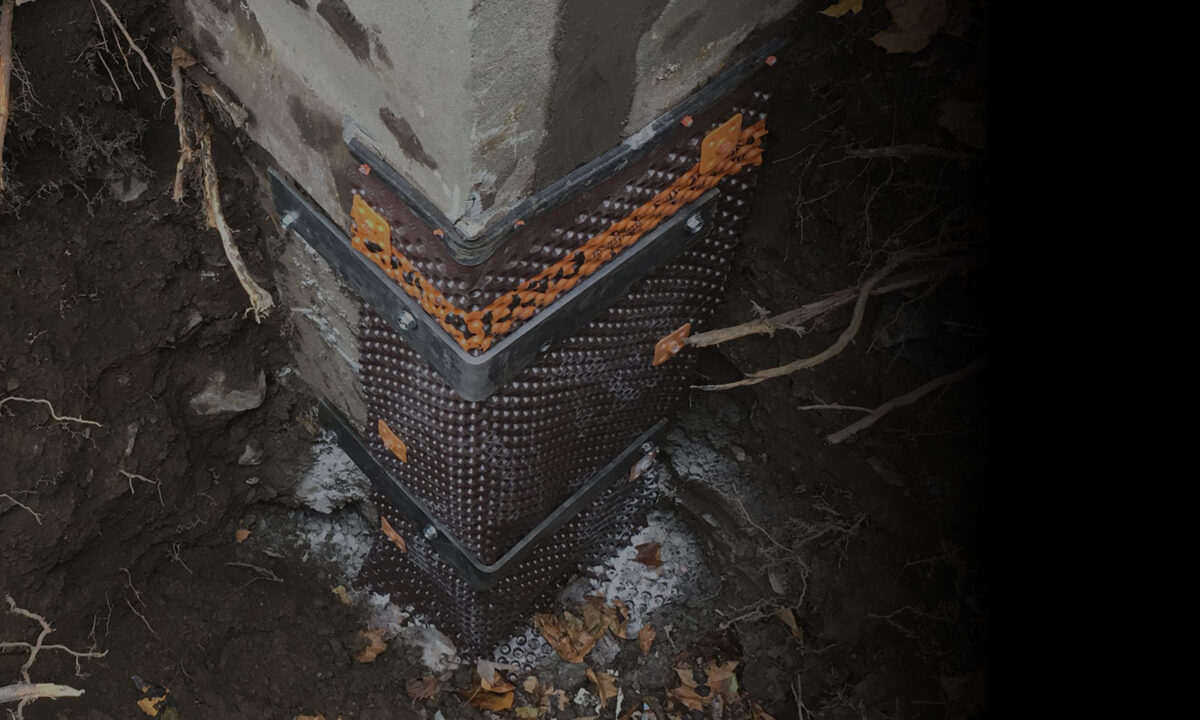
Can Tree Roots Damage a Foundation?
Tree roots almost never break through a concrete foundation. The real risk is indirect: on clay soil, a dry summer can dry out the ground under a footing and let part of the house settle. Trees take water from the soil, but they are rarely the only cause, and cutting one down without an assessment may fix nothing.
The facts below come from two Montréal sources, both in French: the City’s page Les racines des arbres : ce qu’il faut savoir and the fact sheet Racines d’arbres et fondations d’immeubles from Espace pour la vie, the City’s network of nature museums, which includes the Botanical Garden.
Do Tree Roots Break Through a Concrete Foundation?
No. According to Espace pour la vie, roots cannot pierce concrete, and they only get into a foundation that is already cracked. The City of Montréal says the same thing: roots do not pierce concrete and do not cause foundation cracks, but they can grow into an existing crack if they find water and oxygen there.
So a root found inside a crack does not prove that the tree made the crack. To judge what a crack is telling you, read When Is a Foundation Crack Serious in Quebec?
How Can a Tree Still Contribute to Foundation Settlement?
Through the water it draws from the soil. The usual accusation is that roots drink the water out of the clay, which then crumbles and leaves the footing without full support. Espace pour la vie explains that living next to trees is normally not a problem for residential footings. Trouble can start after a dry summer, when the clay and the roots are no longer hydrated and settlement becomes possible.
It adds that roots do draw water, but many other things dry out clay too:
- paved and other hard surfaces
- drainage pipes
- shrubs and other small plants
- excavation trenches
- poorly insulated basements
Its conclusion is that the main cause is the lack of summer rainfall, and that blaming only the trees skews the diagnosis. Clay also calls for deeper, wider and reinforced footings. Those requirements may not have existed when your house was built, or may not have been followed. Our guide on how soil type affects foundation stability explains why some lots are more vulnerable than others.
Can Tree Roots Damage Drains and Sewer Pipes?
The City of Montréal says roots do not pierce sewer pipes that are in good condition. They get into pipes that are already damaged, through cracks or defective joints, and their presence often points to an existing problem. If roots keep coming back in a line, the line needs to be checked, not just the tree. For the drainage side of the question, see French drains vs. interior drainage systems.
How Far From the House Should You Plant a Tree?
As a precaution, Espace pour la vie recommends keeping a distance of at least one times the tree’s mature height. A tree that will reach 12 m (40 ft) goes at least 12 m (40 ft) from the house. It also notes that, according to some forest engineers, roots can spread well past the line of the branches, up to two or three times the tree’s height for some species.
On a small lot, low-spread species make more sense. Espace pour la vie’s list includes, with mature heights that vary by species and cultivar:
- crabapple (Malus): 2 to 8 m (about 7 to 26 ft)
- serviceberry (Amelanchier): 3 to 8 m (about 10 to 26 ft)
- Japanese tree lilac ‘Ivory Silk’: 8 m (about 26 ft)
What Should You Do If a Tree Is Already Close to Your Foundation?
- Photograph and date any damage you notice, as the City of Montréal advises, and note whether a crack grows after a dry summer.
- Have the cause assessed by a foundation specialist before touching the tree. See what to expect during an inspection.
- Consult a qualified arborist before pruning or removing it. Espace pour la vie points to consultants and tree care professionals who are members of the Société internationale d’arboriculture du Québec.
- Check the rules before cutting. In Montréal, a permit is required to fell a tree on your own property. Check with your municipality.
Espace pour la vie also recommends two brochures from the Association des Consommateurs pour la Qualité dans la Construction: Votre maison est fissurée 1 (preventing damage when drying clay is involved) and Votre maison est fissurée 2 (assessing the damage and how urgent the work is). Both are in French.
Marco Réparation de Fondation visits in person for every estimate and every job site inspection. The company holds a valid license from the Régie du bâtiment du Québec (RBQ No. 5775-3246-01) and serves Montreal, Laval, the South Shore (including Longueuil and Brossard), the West Island and Salaberry-de-Valleyfield. See our crack repair page, or read beyond the basement for the signs that show up in the rest of the house.
A tree near your house and a crack you are unsure about?Contact Marco Réparation de Fondation for a free inspection and an honest opinion on the cause.
Frequently Asked Questions
Should I cut down a tree near my foundation?
Not automatically. Espace pour la vie warns that blaming only the trees skews the diagnosis, since other things dry out clay too. Have the cause assessed first, then speak to an arborist, and check whether you need a permit.
Are tree roots the reason my foundation is cracked?
Not necessarily. The City of Montréal says roots do not cause foundation cracks, and a dry summer, the soil and the way the footing was built all play a part. A specialist can tell you which applies to your home.
Do roots grow toward my house looking for water?
People often assume so, but Espace pour la vie says the way roots absorb water is more complex than it looks, and that many myths are attached to roots.